

GG Apiary · Raw Wildflower Honey
You found our
sweet little secret.
Congratulations—you found a little corner of Glacial Gear we save for the curious. Four hives, a tiny seasonal harvest, and something deeply personal to share. Welcome to our apiary on South Carolina’s Blue Ridge escarpment.
Our beekeeping journey
On our own property
Where the mountains meet the foothills
ONE UNEXPECTED QUESTION
It started with a visit to a beekeeper’s shop.
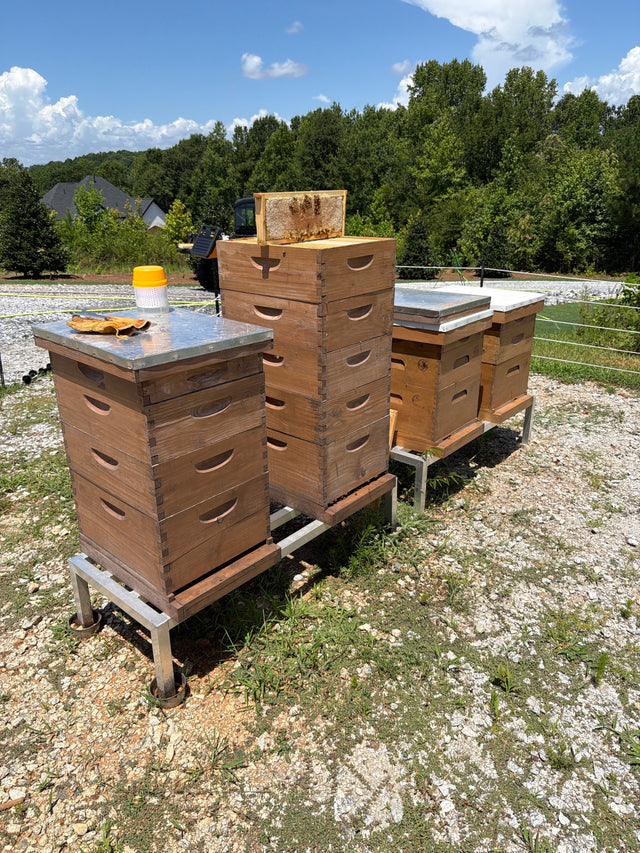
In February 2025, I walked into a beekeeping shop in Travelers Rest, South Carolina. The owner asked if I wanted to become a beekeeper.
Two beekeeping seasons in, here we are: four hives, a proper apiary, and another reason to get outside.
We built a dedicated space on our property, with a proper pad for the hives and electric fencing to help keep bears out. What began as a conversation became something we could build, care for, and keep learning from.
Beekeeping has become a passion for me—a natural extension of what we love about the world around us.
That feels right at home with Glacial Gear. Our love of the outdoors has always been about spending time in it. Sometimes that means a long walk. Sometimes it means tending the hives in our own backyard.
— Shane
A SPECIAL PLACE TO CALL HOME
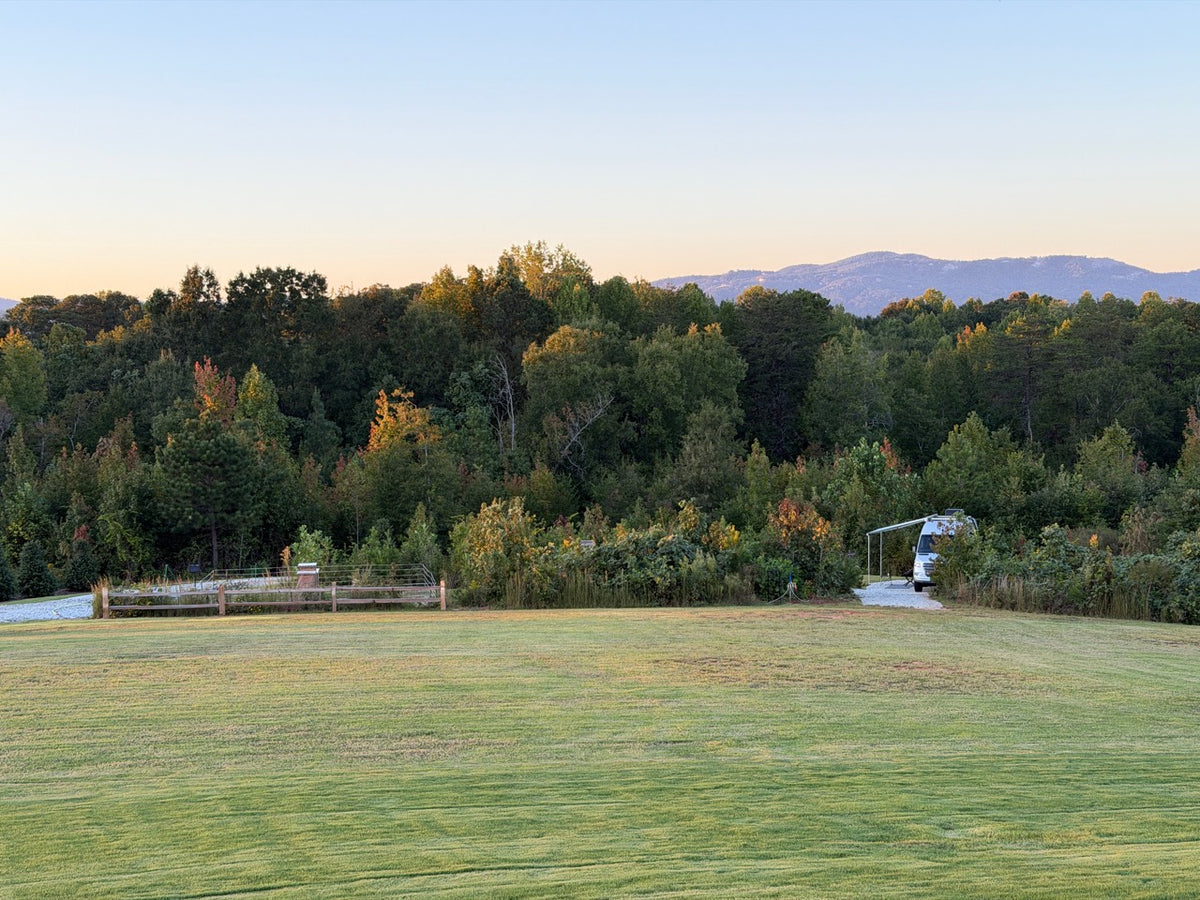
Where mountain blooms meet the foothills.
Our honey comes from the four hives we tend right here on our property, along the Blue Ridge escarpment in upstate South Carolina. This is the edge of the mountains, where wooded slopes meet the lower foothills.
That setting gives our bees access to a varied landscape of pollen and nectar sources, from mountain-side blooms to the trees and flowers of the foothills nearby. What they gather changes with the bloom, the weather, and the season.
To us, every jar is a small connection to this place—and to the quiet work of caring for it. It’s another way to share the outdoors we love.
A FEW THINGS WORTH BUZZING ABOUT
Small bees. A bigger world.
The forest feeds the hive.
In South Carolina, trees are major nectar sources. Upstate hardwoods such as black locust, basswood, and sourwood are part of that regional picture.
Clemson ExtensionPollen has a different job.
Bees turn nectar into honey for energy. Pollen supplies the proteins and fats they need to raise young bees. A variety of flowering plants helps support a varied diet.
Clemson ExtensionThe seasons set the pace.
South Carolina’s spring bloom brings a strong nectar flow. As late spring turns to summer in the foothills, look for sourwood’s long clusters of tiny white bells. Honey bees visit these flowers for nectar in June and July. MelliFloral found sourwood pollen in our July 2026 wildflower honey. Summer can bring leaner stretches, followed by fall flowers such as goldenrods and asters. Weather and nearby plants make every location different.
Our July 2026 pollen profile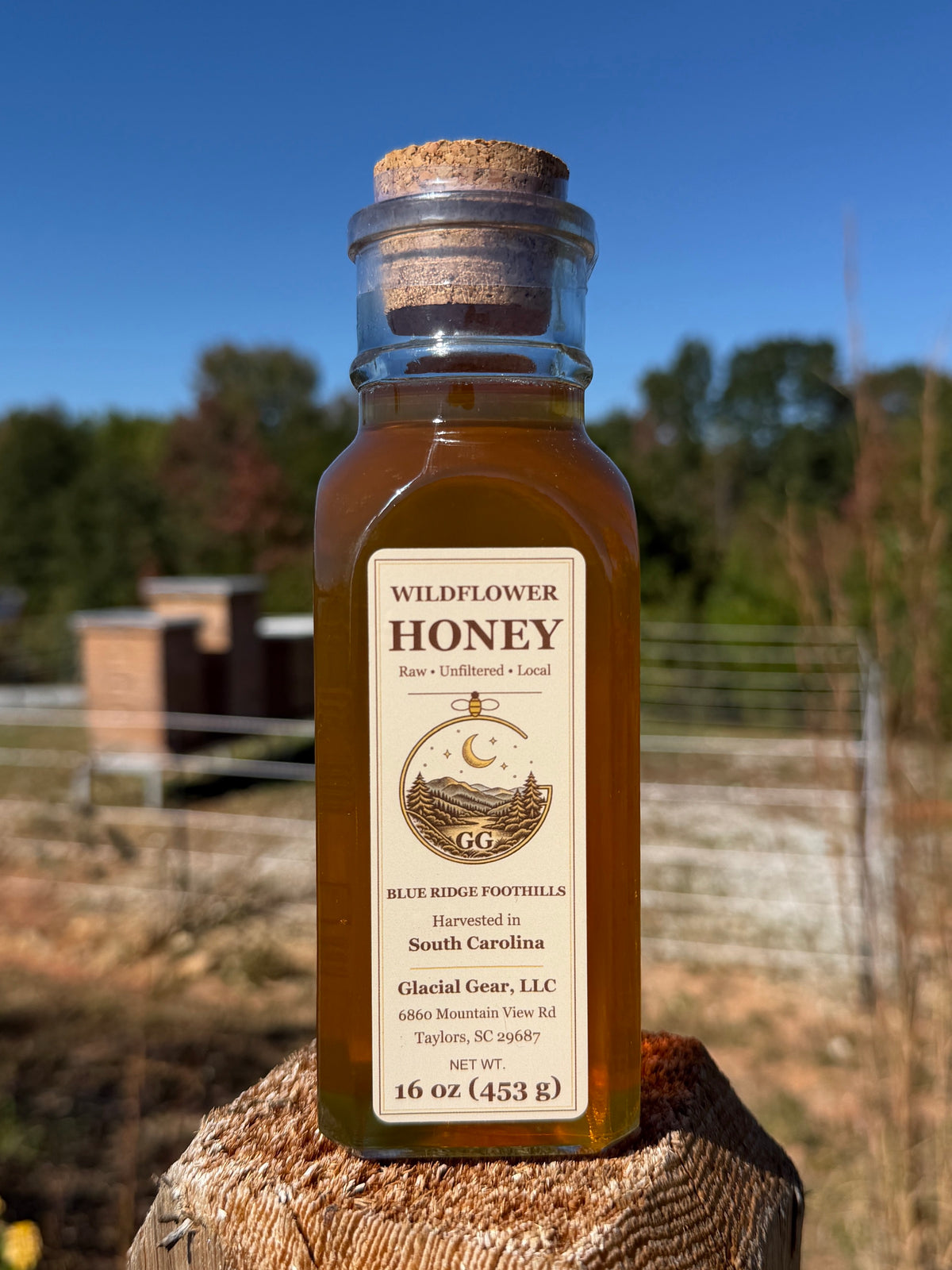
RESERVED FOR SOUTH CAROLINA
GG Apiary Wildflower Honey
Delivered exclusively within South Carolina · Pickup in Taylors
A rare, small-batch harvest, released only when the season leaves us a little to spare.
Explore our July harvest’s pollen profile ↓
Raw, unfiltered wildflower honey from our own four hives on the Blue Ridge escarpment, in the northern part of Taylors, where the mountains meet South Carolina’s upstate foothills.
It’s truly local honey for Greenville County and the rest of the Upstate: every jar comes from our hives alone, never blended with honey from anywhere else. The July harvest’s lab pollen report is below.
Each one-pound Muth jar is bottled, corked and labeled by our family. A keepsake gift edition, presented in a black magnetic box with the jar nested in fitted foam, is coming soon. When this season’s jars are spoken for, the next must wait for another bloom.
Net wt. 16 oz (453 g). Sold under South Carolina’s honey exemption for small beekeepers, our honey is delivered only within the state, with pickup available in Taylors. It makes a lovely local gift for friends, family and neighbors anywhere in South Carolina.
16 jars available from this seasonal release.
Order wildflower honey
USPS shipping within South Carolina · Pickup in Taylors
One jar $29.95 · Two jars $59.90 (USD)
Two jars qualify for free standard shipping within South Carolina.
Ships only to South Carolina addresses. Shipping is calculated at checkout and complimentary on orders of $49.99 or more. Prefer to collect it in person? Choose Pickup in Taylors at checkout, and we’ll email you when your honey is ready.
Returns: All honey sales are final, for food safety. If your jar arrives broken or isn’t what you ordered, email support@glacialgear.com within 7 days with a photo, and we’ll replace it or refund you. Return policy
Hear about the next harvest
We’ll email you when our family bottles the next batch of wildflower honey.
Inside this harvest
July 2026
Greenville County, South Carolina
A little record of where our bees have been.
We sent a sample from our July harvest to MelliFloral for independent pollen analysis. Their findings show a diverse wildflower honey, with pollen from the rose and sumac families, sweet clover, crape myrtle, tulip tree and other flowering plants.
The lab also identified sourwood and estimated its contribution at about 15%. Sourwood leaves relatively little pollen in honey, so its pollen count alone doesn’t tell the whole story.
Every harvest reflects a different mix of blooms. This profile belongs specifically to our July 2026 honey and does not apply to other harvests. Pollen percentages are not the same as nectar percentages.
Explore this harvest’s pollen report (PDF) (opens in a new tab)
Looking for July honey? Please confirm availability with us before ordering. Ask about the July harvest